
By Emmilie Kuks, packaging specialist at Now New Next
When it comes to packaging, many organisations tend to fall into an automatic division of responsibilities. Marketing handles design. Procurement handles materials. Logistics focuses on efficiency. Sustainability checks whether everything meets the requirements. Everyone has their own domain, their own KPIs, and their own budget.
But that is also where the problem starts.
Because in packaging, design and materials are not separate components. They shape each other. In fact, design largely determines how much material you need, how efficiently you can transport a product, and how much cost you structurally build into the system. Yet in practice, they are still often treated as two separate worlds.
The designer makes it look good. Procurement makes it cheaper.
But what if design is actually the key to reducing costs?
The misconception: design as a cost item
Design is often seen as something that adds cost. A new shape. A different finish. Extra details. More attention to appearance. That belongs to branding and marketing, and usually means extra investment.
Materials, on the other hand, are seen as a hard cost factor. How many grams per unit? What is the price per kilo? Can it be made thinner? Can it be cheaper?
But research in eco-design and product development has shown for years that 70 to 80 percent of both a product’s environmental impact and its cost structure is locked in during the design phase. Not in procurement. Not in the factory. Not on the shelf. In the design
At that stage, the following is decided:
- How thick the wall is
- What shape the packaging takes
- What shape the packaging takes
- How much air you are transporting
- How much material you need in the first place
Material choice is not the starting point. It is the result of design decisions.
Shape as a hidden lever
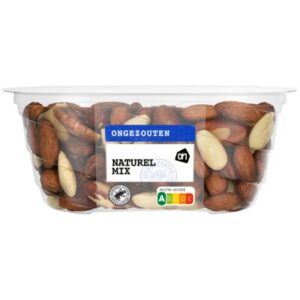
A good example is Albert Heijn’s nut cup, where subtle ribs were added to the design. At first glance, this seems like an aesthetic choice. Ribs add tactility. Rhythm. A contemporary look that fits today’s preference for softer, more fluid shapes.
But those ribs do more than just look good. They increase the structural stiffness of the cup. This allows the wall to be made thinner without sacrificing strength. Less material per pack means a direct reduction in raw materials.
And when you are producing hundreds of thousands of units per year, using less material is not a minor detail. It means tonnes less plastic and therefore lower purchasing costs, creating structural savings.
The reason may be aesthetic. The effect is economic and sustainable. Design as cost saving, not as a cost item.
Transporting less air is also a design decision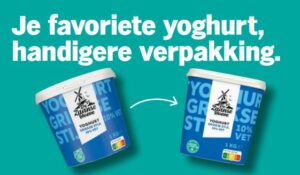
Another example is the shift from round to square yoghurt buckets. At first glance, it looks like a minor change in shape. In reality, it is supply chain optimisation.Een ander voorbeeld is de overgang van ronde naar vierkante yoghurt-emmers. Op het eerste gezicht een kleine vormwijziging. In werkelijkheid een ketenoptimalisatie.
A round bucket always leaves unused space in a box or on a pallet. Square packaging fits together more efficiently. Less air between products means:
- More units per pallet
- Fewer transport movements
- Lower CO₂ emissions.
- Lower logistics costs
Here it becomes clear that form is not an aesthetic detail but a systems choice. Design influences transportation, storage, shelf arrangement and ultimately margin.
Yet these kinds of decisions are often driven not from design, but from operations. While it is precisely in the design phase that there is the most room for maneuver.
The organisation as a barrier
So why are design and material so often treated separately?
Omdat organisaties ook zo zijn ingericht.
- Marketing is judged on brand impact and visibility.
- Purchases are settled on price per kilo or per piece.
- Logistics is judged by efficiency and damage rates.
- Sustainability wordt afgerekend op compliance en doelstellingen.
Everyone optimizes his own part. No one optimizes the whole.
If purchasing looks only at price per pound, thinner material always seems better. If marketing looks only at appearance, extra material may be justified from brand perception. But rarely are form, material, logistics and costs brought together in one integral calculation.
And that’s where value remains.
The real win-win
When designers, engineers and buyers work together from the beginning, the question shifts. Not, “How do we make this as cheap as possible?” Nor, “How do we make this as beautiful as possible?” But, “How do we design this so that it both looks strong, and uses less material, and goes through the supply chain more efficiently?”
This is not an idealistic story, but it should be a business case.
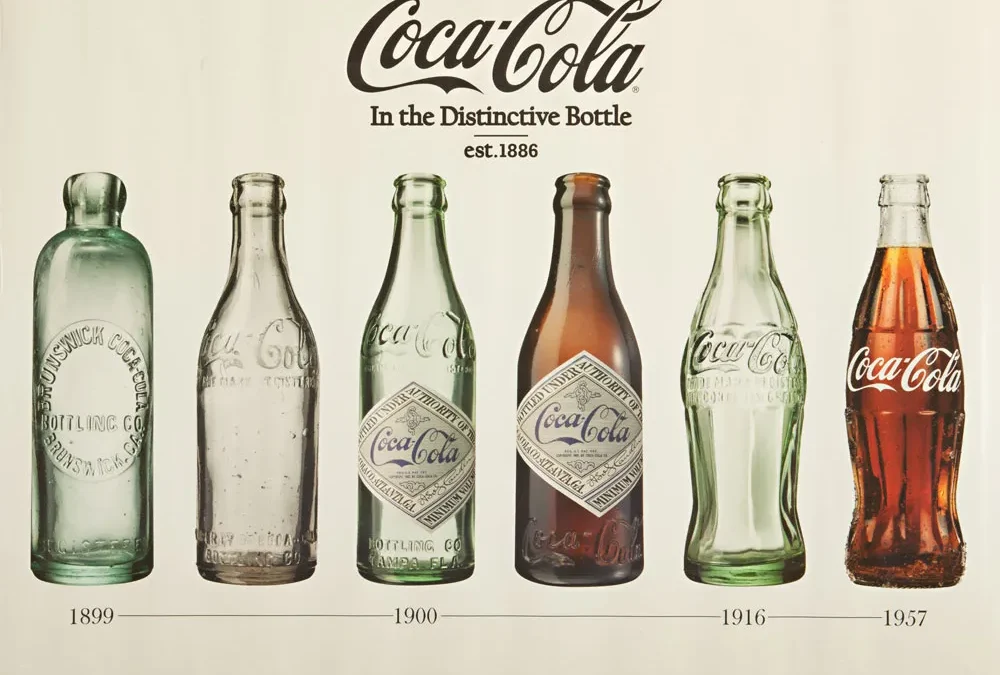
Lightweighting door slimme geometrie is al jaren een strategie bij grote spelers als Coca-Cola. Door ribstructuren en bodemvormen te optimaliseren, zijn miljoenen kilo’s plastic bespaard zonder dat de fles zijn herkenbaarheid verloor.
In architecture, we have known for centuries that clever construction can be stronger than solid material. In packaging, we still apply that principle too little consciously.
A half-gram reduction seems small. But at millions of units per year, it fundamentally changes the cost price. Design is then not a decorative layer, but a margin tool.
Design is not the finishing touch
Perhaps the most persistent misconception is that design is the final layer. The finishing touch after all the technical and logistical requirements have been established.
In reality, design is the moment where everything comes together: brand identity, materials, production, transportation, use and end-of-life. Those who reduce design to aesthetics leave much of its impact untapped.
Sustainable and cost-effective material choices are largely in the design. Not in a later round of optimization.
Those who see design and materials separately optimize partial problems.
Those who put them together optimize the system.
And that is exactly where the real win-win happens: less material, lower costs, stronger brand presence, and a more efficient supply chain.
Maybe it is time to stop treating design as a cost item, and start treating it as a strategic lever.