
By Emmilie Kuks, Sustainable Packaging Specialist
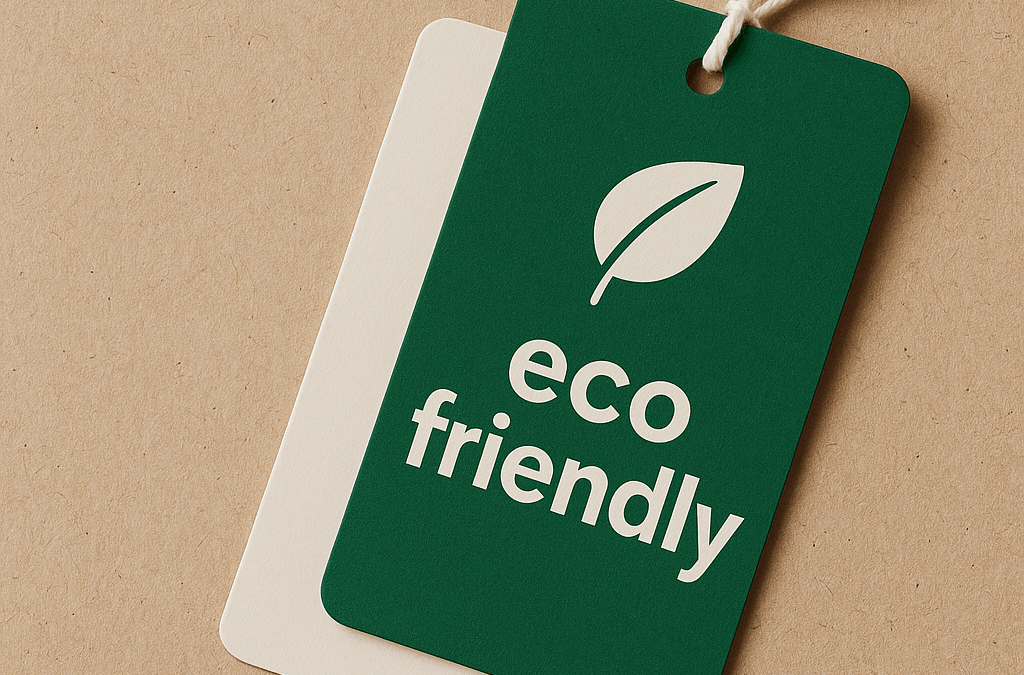
I still turn that salad tray around while standing in front of the supermarket shelf. “Eco-friendly”, “planet positive”. Two logos. But what do they actually mean? And that is coming from someone who, as a packaging designer, reviews LCA analyses every week and practically knows the recycling infrastructure by heart. If even I do not fully understand it, what about everyone else who is just grabbing a quick lunch from the shelf?
As it turns out, I am not the only one. European research shows that fewer than a third of consumers understand what common recycling symbols really mean. It is no surprise, then, that trust in green claims is eroding. And that is exactly where two new sets of rules come in.
That confusion is precisely what the Green Claims Directive was designed to address. While the Dutch ACM guidelines have already been nudging us since 2023 to be “specific and factual”, Brussels is now tightening the screws for real: every environmental claim will need to be approved by an independent auditor before publication, and vague language will be thrown out without hesitation. By 2027, this will be law across the EU. The penalty for misleading claims can reach up to four percent of annual turnover. That is no longer a communication slip-up, but a boardroom-level risk.
So what is the point of claims?
More and more often, I hear the same question from brand owners: “Is a claim even still worth it if we first have to pay for an expensive LCA and audit, without knowing whether it will actually make any difference to consumers?” At the same time, we know that consumers, especially my generation, expect transparency. Saying nothing feels like staying silent. Making a vague claim feels like lying. So what does work?Vanuit merkeigenaren krijg ik steeds vaker dezelfde vraag: “Heeft een claim nog wel zin als we eerst een dure LCA en audit moeten betalen, zonder dat we weten of het de consument uberhaubt iets doet?” Tegelijkertijd weten we dat consumenten – vooral mijn generatie – transparantie eisen. Geen claim voelt als zwijgen. Een vage claim voelt als liegen. Dus wat dan wél?
Why I am still optimistic
Research from McKinsey and NIQ shows that products with hard, verifiable claims have grown faster in recent years than their competitors. It is not the wording that does the work, but the measurable performance behind it. Brands that are willing to communicate one concrete fact, such as “70% recycled content” or certified label marks, earn both trust and sales. Claim inflation fades. Clarity remains.Onderzoek van McKinsey & NIQ laat zien dat producten met harde, verifieerbare claims de afgelopen jaren sneller groeiden dan hun concurrenten. Niet de woorden doen het werk, maar de meetbare prestatie erachter. Merken die één concreet feit durven te communiceren (“70 % recycled content” of gecertificeerde keurmerklogo’s) oogsten vertrouwen én verkoop. Claim-inflatie dooft, helderheid blijft.
What I focus on as a designer
- Measure first, then sketch. Only when the full substantiation is accurate can you communicate it.
- One claim at a time. A calmer label with one strong claim and a QR code linking to the raw data is better than five green icons without explanation. Clients do not benefit from a label jungle.
- Build visual hierarchy. A claim is your first layer of communication. Under that sits the evidence, and for the part of your audience that is genuinely curious, you offer deeper information.Een claim is je eerste communicatiemiddel. Daaronder zit je bewijs en voor dat deel van je klanten dat écht nieuwsgierig is, bied je de verdieping aan.
- Choose your battles. Reserve LCA budget for your high-volume SKUs, and leave niche products claim-free if the capacity simply is not there.
So where are we heading?
Claims are not disappearing. They are becoming sharper and more selective.Brands that dare to focus on one measurable truth, and share it without any fluff, will build a level of credibility that no marketing budget can buy.
In a market where everyone is shouting “green”, silence becomes the new signal. But only if that silence is backed by data.
Emmilie Kuks is Sustainable Packaging Specialist at www.nownewnext.nl and writes monthly on a current topic within packaging